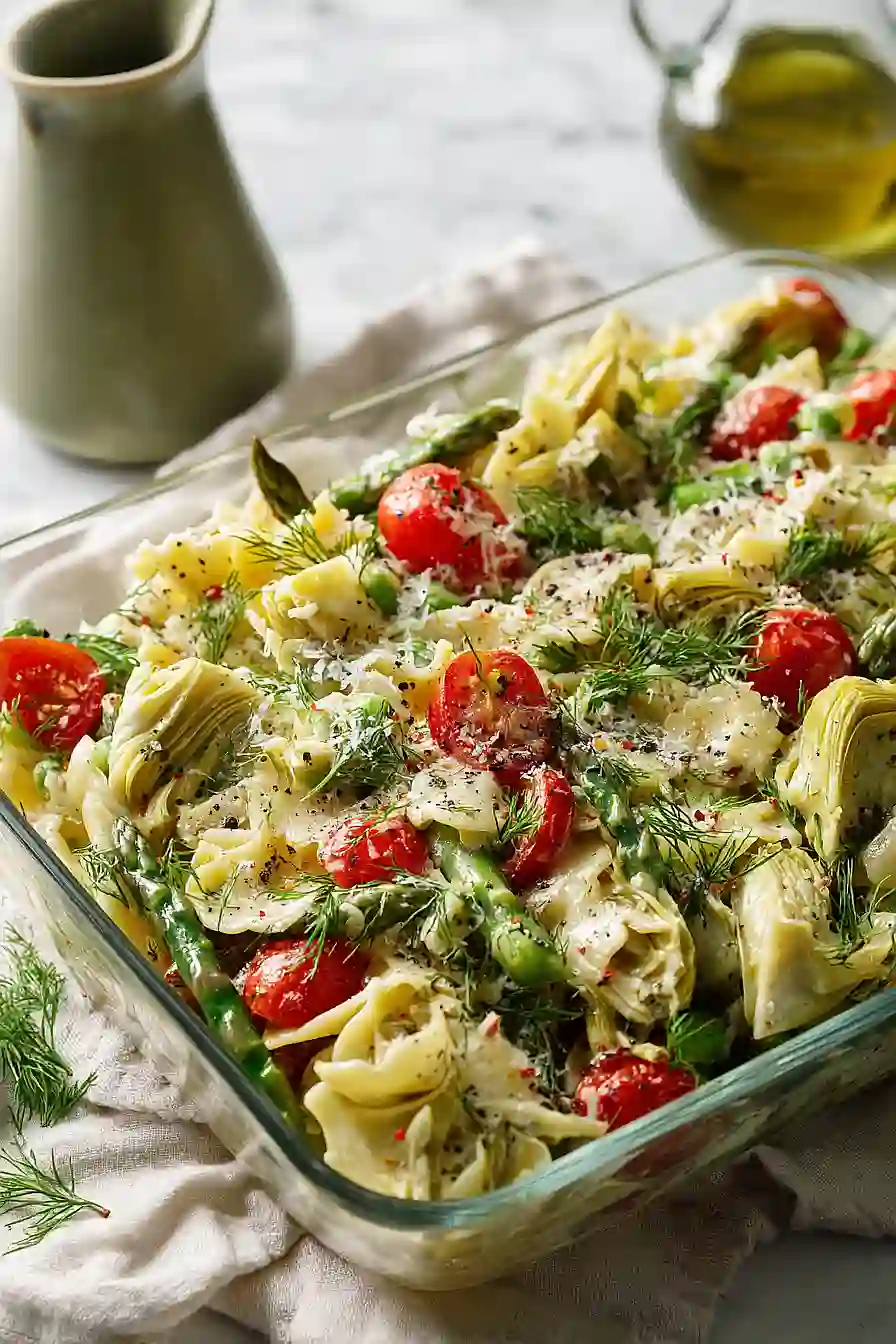
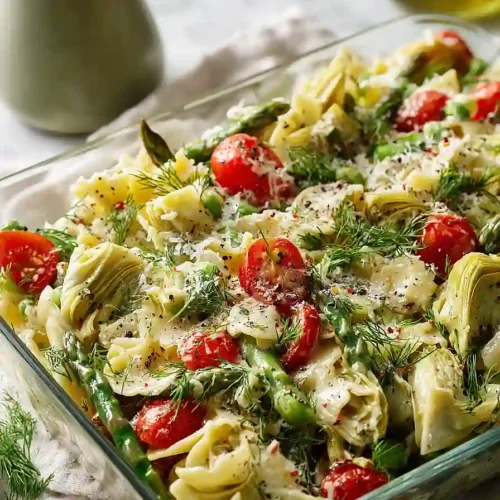
Here is my favorite pasta salad recipe, with tender asparagus and artichoke hearts, fresh tomatoes and herbs, tossed in a tangy lemon-oregano dressing with plenty of feta cheese.
This artichoke and asparagus pasta salad is perfect for potlucks and summer gatherings. I always make a big batch because it tastes even better the next day after all the flavors have had time to soak into the pasta. Plus, it’s one of those dishes that looks like you spent hours in the kitchen, but it actually comes together pretty quickly.
Why You’ll Love This Pasta Salad
- Quick and easy – Ready in just 30-40 minutes, this pasta salad is perfect for busy weeknights or when you need to bring something to a potluck without spending hours in the kitchen.
- Fresh, Mediterranean flavors – The combination of asparagus, artichokes, feta, and fresh herbs gives you those bright, summery tastes that everyone loves.
- Great for meal prep – This salad actually gets better as it sits in the fridge, making it ideal for lunch throughout the week or preparing ahead for gatherings.
- Vegetarian-friendly – Packed with vegetables and protein from the cheese, this dish works as a satisfying main course or a hearty side.
- Crowd-pleaser – The mix of textures and flavors appeals to just about everyone, and it’s always one of the first dishes to disappear at parties.
What Kind of Pasta Should I Use?
For pasta salad, you’ll want to stick with short pasta shapes that can hold onto the dressing and catch all those tasty bits of vegetables. Fusilli, rotini, penne, or bow ties all work great because their nooks and crannies grab the olive oil dressing and keep every bite flavorful. You can use regular pasta, whole wheat, or even chickpea pasta if you’re looking for extra protein. Just make sure to cook it al dente since it will continue to soften a bit as it sits in the dressing, and nobody wants mushy pasta salad.

Options for Substitutions
This pasta salad is pretty forgiving when it comes to swaps, so feel free to work with what you have:
- Pasta: Any short pasta shape works great here – try rotini, penne, farfalle, or even shells. Whole wheat or gluten-free pasta are good options too if that’s your preference.
- Asparagus: If asparagus isn’t in season or you don’t have any, green beans or snap peas make excellent substitutes. Just blanch them the same way you would the asparagus.
- Artichoke hearts: Canned or jarred artichoke hearts both work fine. If you can’t find them, try roasted red peppers or sun-dried tomatoes for a similar tangy, savory element.
- Feta cheese: Not a feta fan? Goat cheese or cubed mozzarella work nicely. You could also use more parmesan if that’s all you have on hand.
- Dill: Fresh basil or parsley are great alternatives if you’re not into dill or don’t have any available. Dried dill works too – just use about 1 tablespoon instead.
- Scallions: Regular yellow or red onion can replace scallions. Just dice them finely and use about half the amount, as they’re stronger in flavor.
- Lemon juice: White wine vinegar or additional red wine vinegar can step in for lemon juice if needed, though you’ll lose a bit of that bright citrus flavor.
Watch Out for These Mistakes While Cooking
The biggest mistake people make with pasta salad is not seasoning the pasta while it’s still warm, which means it won’t absorb the flavors as well – toss your drained pasta and asparagus with a bit of the dressing right away for maximum flavor.
Overcooking the asparagus is another common issue, so make sure you’re only adding it during the last 2 minutes of pasta cooking time and then immediately rinsing everything under cold water to stop the cooking process and keep that bright green color.
Don’t skip the rinsing step after draining, as starchy pasta will make your salad gummy and clumpy instead of light and fresh.
Finally, pasta salad tastes better after sitting for at least an hour in the fridge, so make it ahead of time and add a splash more olive oil or lemon juice before serving if it looks dry, since pasta tends to soak up dressing as it sits.

What to Serve With Artichoke and Asparagus Pasta Salad?
This pasta salad is pretty filling on its own, but it pairs really well with grilled chicken or shrimp if you want to add some protein. Since it’s got those bright Mediterranean flavors from the lemon, feta, and oregano, it goes great alongside grilled lamb chops or even a simple rotisserie chicken from the store. I love bringing this to potlucks and barbecues because it works as either a side dish or a main course, and it tastes even better after sitting in the fridge for a few hours so all those flavors can hang out together. If you’re serving it at a cookout, throw some garlic bread on the grill or set out some pita chips for scooping.
Storage Instructions
Store: This pasta salad actually gets better after sitting for a few hours as the flavors meld together. Keep it in an airtight container in the fridge for up to 4 days. You might need to add a splash of olive oil or lemon juice before serving since pasta tends to soak up the dressing over time.
Make Ahead: This is a great dish to prep the night before a gathering or potluck. The vegetables hold up really well, and the flavors have time to develop. Just give it a good stir and taste for seasoning before serving, as cold temperatures can dull the flavors a bit.
Serve: I like to take this out of the fridge about 20-30 minutes before serving so it’s not ice cold. Pasta salad tastes best at room temperature, and you’ll be able to enjoy all those fresh herbs and tangy feta much more when it’s not straight from the fridge.
| Preparation Time | 20-25 minutes |
| Cooking Time | 10-15 minutes |
| Total Time | 30-40 minutes |
| Level of Difficulty | Medium |
| Servings | 6 servings |
Estimated Nutrition
Estimated nutrition for the whole recipe (without optional ingredients):
- Calories: 2200-2400
- Protein: 55-65 g
- Fat: 95-110 g
- Carbohydrates: 275-295 g
Ingredients
For the salad:
- 12 oz pasta (I always use Barilla rotini for its texture)
- 1 lb asparagus (trimmed and cut into 1-inch lengths)
- 10 oz artichoke hearts
- 12 oz tomatoes (halved or quartered depending on size)
- 1 bunch scallions
- 1/4 cup dill
- 1 cup feta (I prefer President Crumbled Feta for its tang)
- 3/4 tsp salt
- 1/2 tsp pepper
For the dressing:
- 1/3 cup olive oil
- 3 tbsp lemon juice (freshly squeezed for best brightness)
- 1 tsp red wine vinegar
- 1 tsp honey
- 1 1/4 tsp salt
- 3/4 tsp pepper
- 1 tsp garlic powder
- 2 tsp oregano
- 1/4 tsp red pepper flakes
- 1/4 cup parmesan (finely grated to blend smoothly)
Step 1: Prepare the Mise en Place and Dressing
- 1 lb asparagus, trimmed and cut into 1-inch lengths
- 12 oz tomatoes, halved or quartered
- 1 bunch scallions, sliced
- 1/4 cup dill, chopped
- 1 cup feta, crumbled
- 1/3 cup olive oil
- 3 tbsp lemon juice, freshly squeezed
- 1 tsp red wine vinegar
- 1 tsp honey
- 1 1/4 tsp salt
- 3/4 tsp pepper
- 1 tsp garlic powder
- 2 tsp oregano
- 1/4 tsp red pepper flakes
- 1/4 cup parmesan, finely grated
While waiting for water to boil, prepare all your ingredients to streamline the final assembly.
Trim the asparagus and cut into 1-inch lengths, halve or quarter the tomatoes depending on size, slice the scallions, chop the dill, and crumble the feta.
In a small bowl, whisk together the olive oil, freshly squeezed lemon juice, red wine vinegar, honey, garlic powder, oregano, red pepper flakes, 1 1/4 tsp salt, 3/4 tsp pepper, and finely grated Parmesan until emulsified and well combined.
Set the dressing aside—this gets better as it sits and allows flavors to meld.
Step 2: Cook the Pasta and Asparagus
- 12 oz pasta
- asparagus from Step 1
- salt for pasta water
Bring a large pot of salted water to a boil and add the 12 oz pasta, stirring occasionally to prevent sticking.
Cook according to package directions (usually 8-10 minutes), then add the prepared asparagus pieces during the final 2 minutes of cooking.
This timing ensures the asparagus remains tender-crisp rather than becoming mushy.
Drain the pasta and asparagus in a colander, then rinse thoroughly under cold running water to stop the cooking process and cool everything to room temperature.
Step 3: Combine Vegetables and Build the Salad
- 10 oz artichoke hearts, drained
- tomatoes from Step 1
- scallions from Step 1
- dill from Step 1
- feta from Step 1
- 3/4 tsp salt
- 1/2 tsp pepper
- pasta and asparagus from Step 2
- dressing from Step 1
Drain the artichoke hearts and add them to a large mixing bowl along with the tomatoes, scallions, dill, and feta from Step 1.
Season this mixture with 3/4 tsp salt and 1/2 tsp pepper, then toss gently to combine.
Add the cooled pasta and asparagus from Step 2 to the vegetable mixture.
Pour the prepared dressing over everything and toss thoroughly until all components are evenly coated and flavors begin to meld.
I like to let this sit for 10-15 minutes before serving so the pasta absorbs the bright dressing flavors—it really transforms the dish.
Step 4: Taste and Finish
- salt and pepper to taste
Taste the salad and adjust seasoning as needed with additional salt and pepper to your preference.
The beauty of a pasta salad is its flexibility—you can make it bolder or more subtle depending on your palate.
Serve at room temperature for the best flavor development, or chill briefly if you prefer it cooler.
Veggie Artichoke and Asparagus Pasta Salad
Ingredients
For the salad
- 12 oz pasta (I always use Barilla rotini for its texture)
- 1 lb asparagus (trimmed and cut into 1-inch lengths)
- 10 oz artichoke hearts
- 12 oz tomatoes (halved or quartered depending on size)
- 1 bunch scallions
- 1/4 cup dill
- 1 cup feta (I prefer President Crumbled Feta for its tang)
- 3/4 tsp salt
- 1/2 tsp pepper
For the dressing
- 1/3 cup olive oil
- 3 tbsp lemon juice (freshly squeezed for best brightness)
- 1 tsp red wine vinegar
- 1 tsp honey
- 1 1/4 tsp salt
- 3/4 tsp pepper
- 1 tsp garlic powder
- 2 tsp oregano
- 1/4 tsp red pepper flakes
- 1/4 cup parmesan (finely grated to blend smoothly)
Instructions
- While waiting for water to boil, prepare all your ingredients to streamline the final assembly. Trim the asparagus and cut into 1-inch lengths, halve or quarter the tomatoes depending on size, slice the scallions, chop the dill, and crumble the feta. In a small bowl, whisk together the olive oil, freshly squeezed lemon juice, red wine vinegar, honey, garlic powder, oregano, red pepper flakes, 1 1/4 tsp salt, 3/4 tsp pepper, and finely grated Parmesan until emulsified and well combined. Set the dressing aside—this gets better as it sits and allows flavors to meld.
- Bring a large pot of salted water to a boil and add the 12 oz pasta, stirring occasionally to prevent sticking. Cook according to package directions (usually 8-10 minutes), then add the prepared asparagus pieces during the final 2 minutes of cooking. This timing ensures the asparagus remains tender-crisp rather than becoming mushy. Drain the pasta and asparagus in a colander, then rinse thoroughly under cold running water to stop the cooking process and cool everything to room temperature.
- Drain the artichoke hearts and add them to a large mixing bowl along with the tomatoes, scallions, dill, and feta from Step 1. Season this mixture with 3/4 tsp salt and 1/2 tsp pepper, then toss gently to combine. Add the cooled pasta and asparagus from Step 2 to the vegetable mixture. Pour the prepared dressing over everything and toss thoroughly until all components are evenly coated and flavors begin to meld. I like to let this sit for 10-15 minutes before serving so the pasta absorbs the bright dressing flavors—it really transforms the dish.
- Taste the salad and adjust seasoning as needed with additional salt and pepper to your preference. The beauty of a pasta salad is its flexibility—you can make it bolder or more subtle depending on your palate. Serve at room temperature for the best flavor development, or chill briefly if you prefer it cooler.