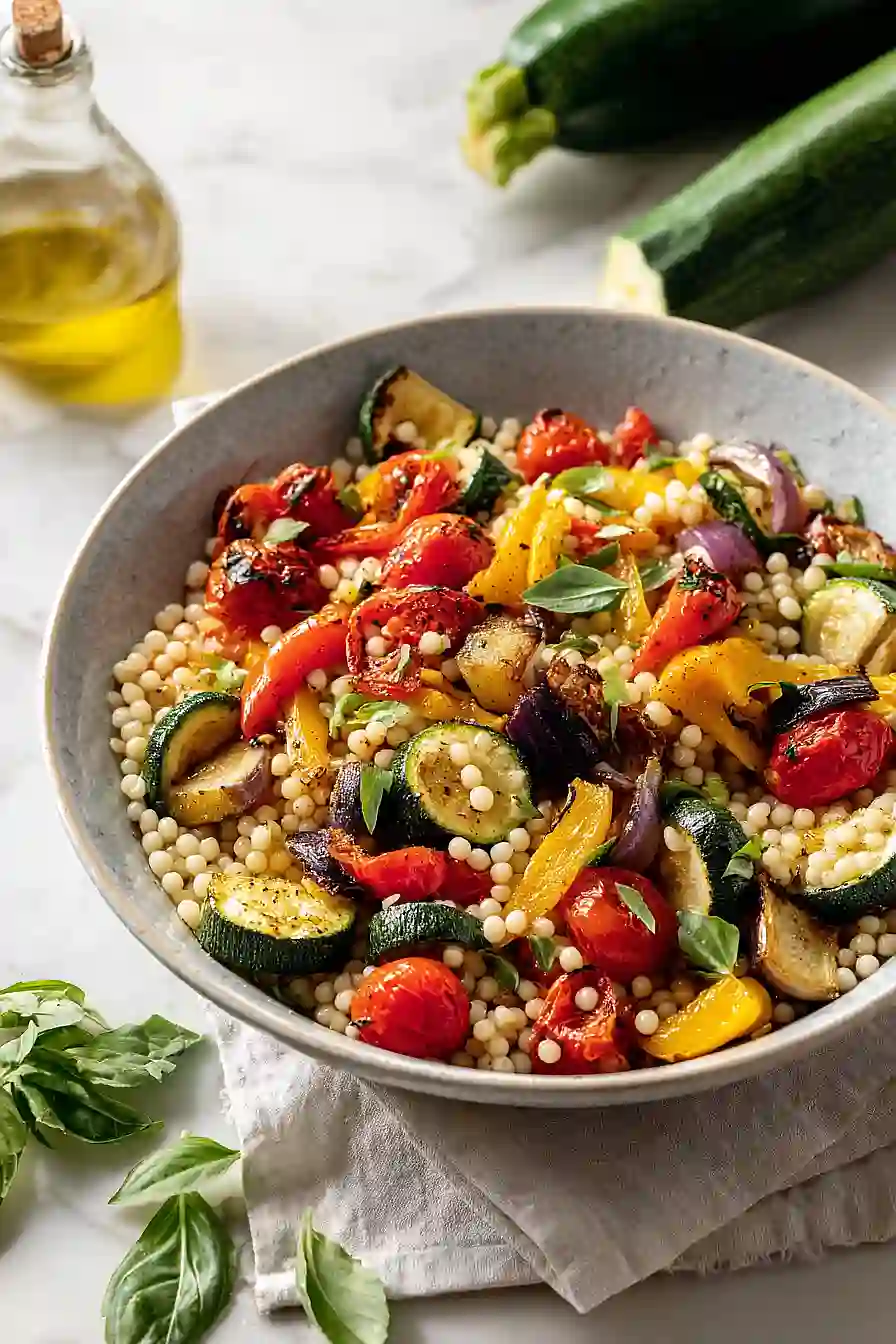
If you ask me, Israeli couscous is one of the best pantry staples you can keep on hand.
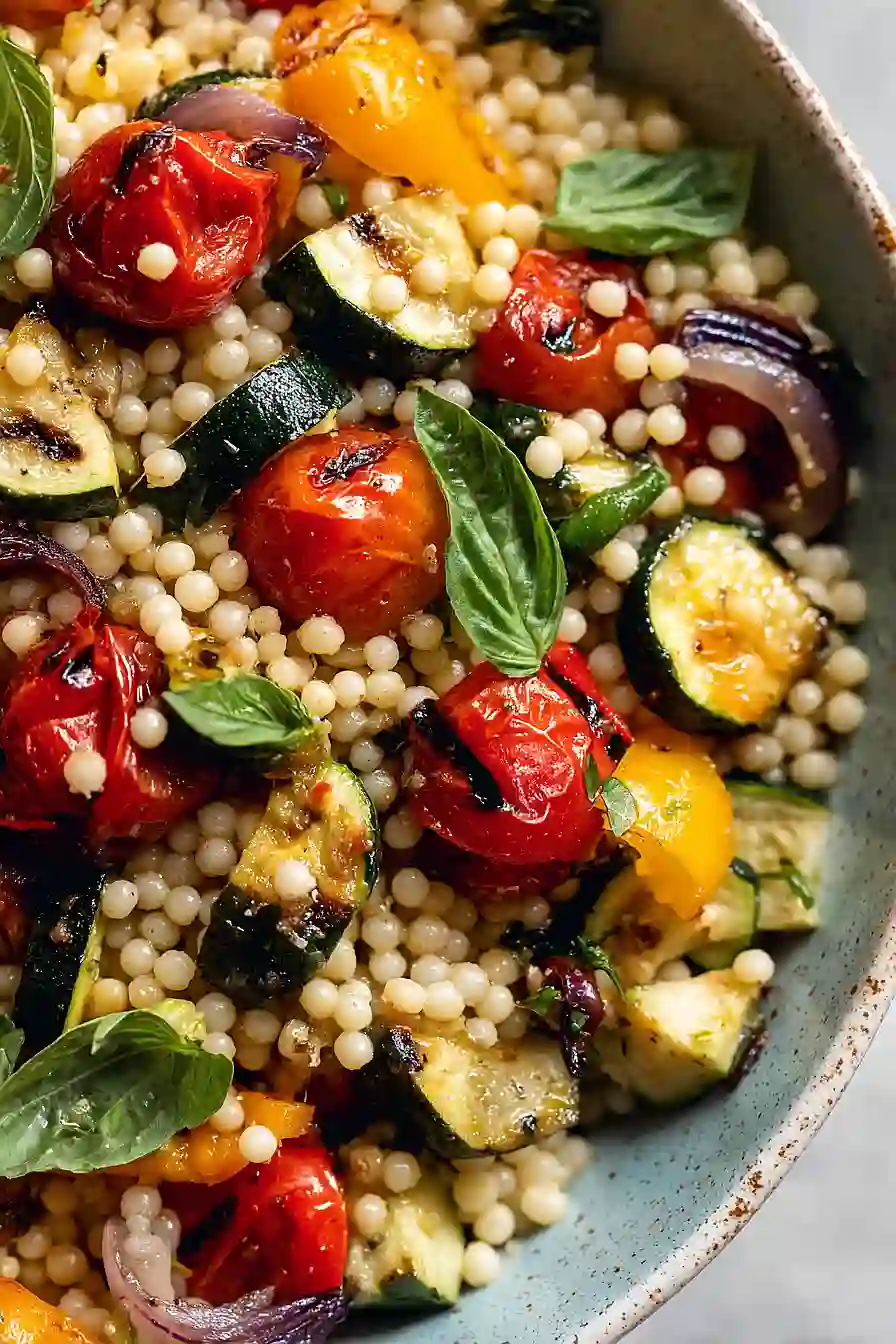
This colorful side dish brings together tender pearl couscous with a mix of roasted vegetables that get nice and caramelized in the oven. Zucchini, bell peppers, tomatoes, and red onion turn sweet and soft as they roast, making the perfect topping for the chewy couscous pearls.
The whole thing gets tossed in a simple balsamic dressing with a hint of dijon and lemon juice. It’s the kind of dressing that pulls everything together without being too fussy.
It’s a filling side that works just as well at room temperature as it does warm, perfect for potlucks or make-ahead lunches.
Why You’ll Love This Israeli Couscous Salad
- Packed with vegetables – This salad is loaded with colorful roasted veggies like zucchini, tomatoes, and bell peppers, making it a nutritious choice that doesn’t skimp on flavor.
- Perfect for meal prep – You can make this ahead and enjoy it throughout the week, as it tastes even better the next day when the flavors have had time to blend together.
- Works as a main or side dish – Serve it as a light lunch on its own or pair it with grilled chicken or fish for a complete dinner.
- Great for gatherings – This salad is a real crowd-pleaser at potlucks and barbecues, and it holds up well at room temperature so you don’t have to worry about keeping it hot or cold.
What Kind of Couscous Should I Use?
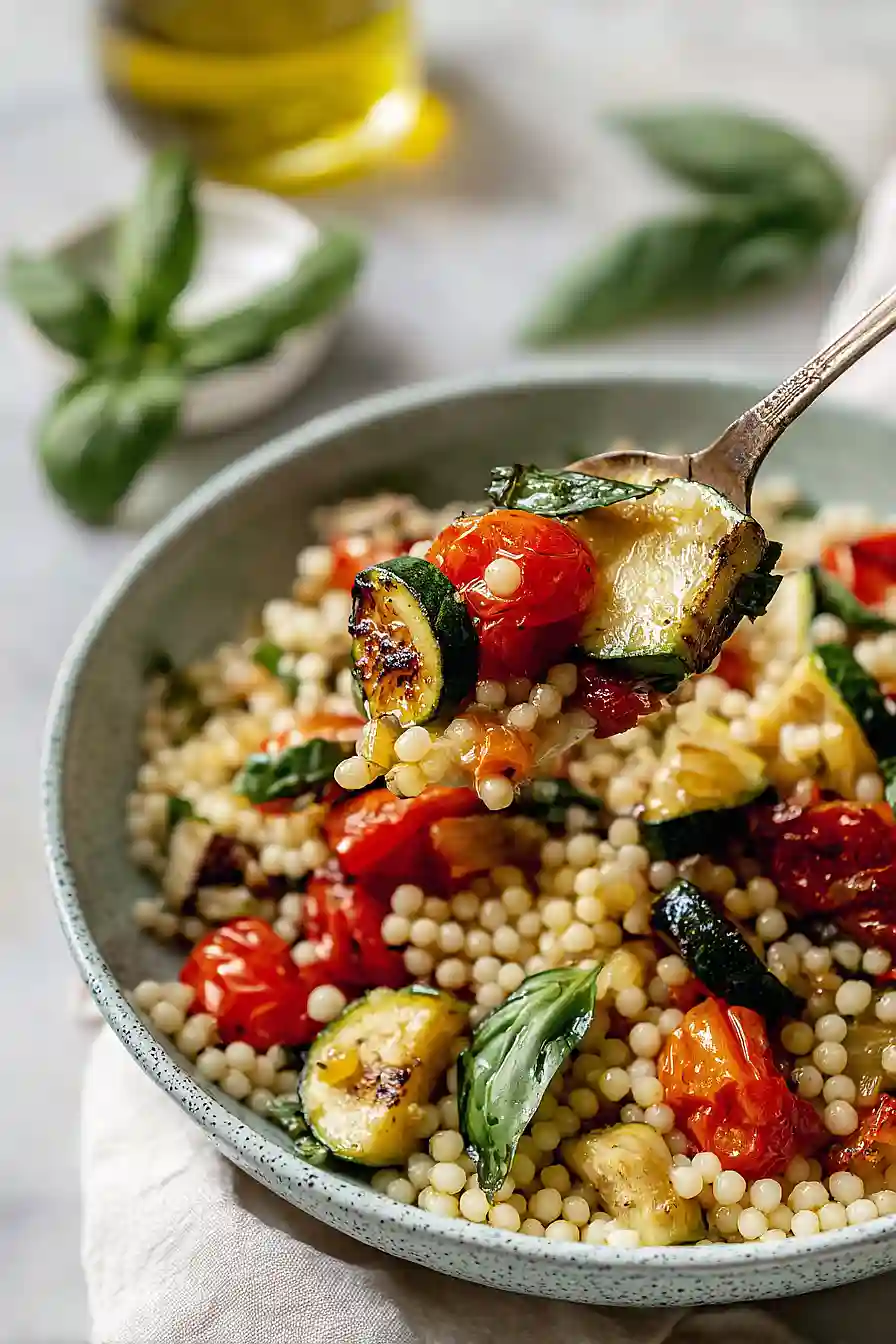
For this recipe, you’ll want to use Israeli couscous, which is also called pearl couscous. It’s quite different from regular couscous – the pearls are much larger, about the size of peppercorns, and have a wonderful chewy texture that holds up great in salads. You can find Israeli couscous in most grocery stores, usually in the pasta or international foods aisle. If you can’t track down Israeli couscous, you could substitute with orzo pasta in a pinch, though the texture will be slightly different. Just make sure to cook it according to the package directions and let it cool before tossing it with your roasted vegetables.
Options for Substitutions
This salad is pretty forgiving when it comes to swapping ingredients:
- Israeli couscous: Regular couscous works in a pinch, though it’ll give you a different texture – just adjust the cooking time to about 5 minutes instead. You can also try orzo pasta or quinoa for a similar hearty grain salad feel.
- Vegetable stock: Plain water works fine if you don’t have stock on hand. Just add a pinch of extra salt to make up for the lost flavor.
- Roasted vegetables: Feel free to mix and match your veggies based on what’s in your fridge. Eggplant, mushrooms, asparagus, or cauliflower would all be great here. Just keep the roasting time and temperature similar.
- Balsamic vinegar: Red wine vinegar or apple cider vinegar can step in if you’re out of balsamic. You might want to add a tiny pinch of sugar to balance the acidity.
- Dijon mustard: Regular yellow mustard or whole grain mustard both work as substitutes. Just use a bit less if you’re using yellow mustard since it’s milder.
Watch Out for These Mistakes While Cooking
The biggest mistake with Israeli couscous is treating it like regular couscous – it needs to be toasted in olive oil first to develop a nutty flavor and prevent it from turning mushy when you add the liquid.
Overcrowding your vegetables on the baking sheet will cause them to steam instead of roast, so spread them out in a single layer with some space between pieces to get those nice caramelized edges.
When cooking the couscous, keep an eye on the liquid level and stir occasionally to prevent sticking to the bottom of the pot, and if it seems dry before the 20 minutes are up, add a splash more stock.
For the best flavor, toss the couscous and vegetables with the dressing while everything is still warm, which helps the ingredients absorb the vinaigrette better than if you wait until they’ve cooled completely.
What to Serve With Israeli Couscous Salad?
This couscous salad is hearty enough to work as a main dish for lunch, but it also makes a great side for grilled chicken, lamb kebabs, or fish like salmon or cod. If you’re looking to round out a meal, serve it alongside some hummus and warm pita bread, or add a dollop of tzatziki on top for extra creaminess. The salad also pairs nicely with falafel or grilled halloumi cheese if you want to keep things vegetarian. Since it’s loaded with roasted veggies, you really just need a simple protein to make it a complete meal.
Storage Instructions
Store: This salad actually gets better after a day in the fridge as the flavors have time to meld together. Keep it in an airtight container in the refrigerator for up to 4 days. The couscous will soak up some of the dressing over time, so you might want to drizzle a bit more olive oil or dressing before serving if it seems dry.
Make Ahead: This is a great make-ahead dish for meal prep or parties. You can roast the vegetables and cook the couscous a day in advance, then toss everything together a few hours before serving. If you’re planning to keep it for a few days, consider storing the dressing separately and adding it as needed to keep everything fresh.
Serve: This salad is delicious served cold or at room temperature. If you’ve stored it in the fridge, just pull it out about 20 minutes before serving to take the chill off. Give it a good stir and taste it before serving, as you might want to add a splash more vinegar or a pinch of salt to brighten up the flavors.
| Preparation Time | 20-30 minutes |
| Cooking Time | 65-75 minutes |
| Total Time | 85-105 minutes |
| Level of Difficulty | Medium |
| Servings | 4 servings |
Estimated Nutrition
Estimated nutrition for the whole recipe (without optional ingredients):
- Calories: 1400-1600
- Protein: 16-20 g
- Fat: 90-100 g
- Carbohydrates: 135-150 g
Ingredients
For the roasted vegetables:
- 2 zucchini (cut into 1/2-inch thick half-moons)
- 1 pint tomatoes
- 1 red onion (diced into 1-inch chunks to roast evenly)
- 2 bell peppers
- 3 garlic cloves (left whole in skins to prevent burning)
- 4 tbsp olive oil (I prefer Lucini Premium Select for roasting)
- 1.25 tsp salt
- 0.75 tsp pepper
- 1/4 tsp dried oregano
For the couscous:
- 1 tbsp olive oil
- 1 cup couscous (I use Bob’s Red Mill Pearl Couscous for the best chew)
- 2 cups vegetable stock
For the vinaigrette:
- 2/3 cup olive oil
- 3 tbsp balsamic vinegar (I recommend Fini for a thick, syrupy finish)
- 1 tsp dijon mustard (helps emulsify the dressing and adds tang)
- 1.5 tsp lemon juice
- salt to taste
- pepper to taste
Step 1: Prepare and Roast the Vegetables
- 2 zucchini, cut into 1/2-inch thick half-moons
- 1 pint tomatoes, halved
- 1 red onion, diced into 1-inch chunks
- 2 bell peppers, cut into large pieces
- 3 garlic cloves, left whole in skins
- 4 tbsp olive oil
- 1 tsp salt
- 0.75 tsp pepper
- 1/4 tsp dried oregano
Preheat your oven to 400°F.
Cut the zucchini into 1/2-inch thick half-moons, dice the red onion into 1-inch chunks, cut the bell peppers into large pieces, halve the tomatoes, and leave the garlic cloves whole in their skins to prevent them from burning.
On a large baking sheet, toss all the vegetables together with 4 tablespoons of olive oil, 1 teaspoon of salt, 3/4 teaspoon of pepper, and the dried oregano until evenly coated.
Spread them in a single layer and roast for 40-45 minutes, stirring halfway through, until the vegetables are caramelized and tender.
I prefer using a premium olive oil like Lucini for roasting because it adds a subtle richness that elevates the entire dish.
Step 2: Toast and Cook the Couscous
- 1 tbsp olive oil
- 1 cup couscous
- 2 cups vegetable stock
While the vegetables roast, heat 1 tablespoon of olive oil in a medium pot over medium heat.
Add the couscous and toast it for 5-8 minutes, stirring frequently, until it becomes golden and fragrant—this toasting step develops a nutty flavor that makes the couscous more interesting.
Pour in the vegetable stock, bring it to a boil, then reduce the heat to low, cover, and simmer for 20 minutes until the liquid is fully absorbed and the couscous is tender.
I like using Bob’s Red Mill Pearl Couscous specifically because it holds its shape and has the best chew compared to other brands.
Step 3: Build the Vinaigrette
- 2/3 cup olive oil
- 3 tbsp balsamic vinegar
- 1 tsp dijon mustard
- 1.5 tsp lemon juice
- salt to taste
- pepper to taste
In a small bowl, whisk together 2/3 cup of olive oil, 3 tablespoons of balsamic vinegar, 1 teaspoon of Dijon mustard, and 1.5 teaspoons of lemon juice.
The mustard acts as an emulsifier, helping the oil and vinegar blend smoothly rather than separating, while adding a subtle tangy bite.
Season with additional salt and pepper to taste.
A quality balsamic vinegar like Fini will give you that thick, syrupy finish that coats the couscous beautifully without making it watery.
Step 4: Assemble the Salad
- couscous from Step 2
- roasted vegetables from Step 1
- vinaigrette from Step 3
Once the couscous is cooked and still warm, transfer it to a large serving bowl.
Add the roasted vegetables from Step 1 (including the caramelized pieces and the soft garlic cloves) and pour the vinaigrette from Step 3 over everything.
Toss gently but thoroughly to distribute the dressing evenly and let the warm couscous absorb the flavors.
The warmth of the freshly cooked components helps the vinaigrette meld with the other ingredients, creating a cohesive, flavorful dish rather than simply coating the surface.
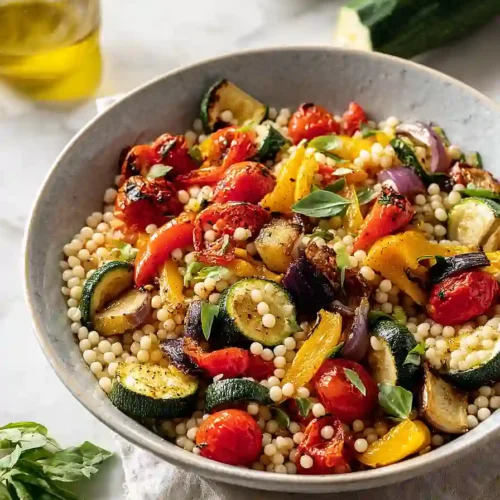
Warm Israeli Couscous Salad with Roasted Vegetables
Ingredients
For the roasted vegetables::
- 2 zucchini (cut into 1/2-inch thick half-moons)
- 1 pint tomatoes
- 1 red onion (diced into 1-inch chunks to roast evenly)
- 2 bell peppers
- 3 garlic cloves (left whole in skins to prevent burning)
- 4 tbsp olive oil (I prefer Lucini Premium Select for roasting)
- 1.25 tsp salt
- 0.75 tsp pepper
- 1/4 tsp dried oregano
For the couscous::
- 1 tbsp olive oil
- 1 cup couscous (I use Bob’s Red Mill Pearl Couscous for the best chew)
- 2 cups vegetable stock
For the vinaigrette::
- 2/3 cup olive oil
- 3 tbsp balsamic vinegar (I recommend Fini for a thick, syrupy finish)
- 1 tsp dijon mustard (helps emulsify the dressing and adds tang)
- 1.5 tsp lemon juice
- salt to taste
- pepper to taste
Instructions
- Preheat your oven to 400°F. Cut the zucchini into 1/2-inch thick half-moons, dice the red onion into 1-inch chunks, cut the bell peppers into large pieces, halve the tomatoes, and leave the garlic cloves whole in their skins to prevent them from burning. On a large baking sheet, toss all the vegetables together with 4 tablespoons of olive oil, 1 teaspoon of salt, 3/4 teaspoon of pepper, and the dried oregano until evenly coated. Spread them in a single layer and roast for 40-45 minutes, stirring halfway through, until the vegetables are caramelized and tender. I prefer using a premium olive oil like Lucini for roasting because it adds a subtle richness that elevates the entire dish.
- While the vegetables roast, heat 1 tablespoon of olive oil in a medium pot over medium heat. Add the couscous and toast it for 5-8 minutes, stirring frequently, until it becomes golden and fragrant—this toasting step develops a nutty flavor that makes the couscous more interesting. Pour in the vegetable stock, bring it to a boil, then reduce the heat to low, cover, and simmer for 20 minutes until the liquid is fully absorbed and the couscous is tender. I like using Bob's Red Mill Pearl Couscous specifically because it holds its shape and has the best chew compared to other brands.
- In a small bowl, whisk together 2/3 cup of olive oil, 3 tablespoons of balsamic vinegar, 1 teaspoon of Dijon mustard, and 1.5 teaspoons of lemon juice. The mustard acts as an emulsifier, helping the oil and vinegar blend smoothly rather than separating, while adding a subtle tangy bite. Season with additional salt and pepper to taste. A quality balsamic vinegar like Fini will give you that thick, syrupy finish that coats the couscous beautifully without making it watery.
- Once the couscous is cooked and still warm, transfer it to a large serving bowl. Add the roasted vegetables from Step 1 (including the caramelized pieces and the soft garlic cloves) and pour the vinaigrette from Step 3 over everything. Toss gently but thoroughly to distribute the dressing evenly and let the warm couscous absorb the flavors. The warmth of the freshly cooked components helps the vinaigrette meld with the other ingredients, creating a cohesive, flavorful dish rather than simply coating the surface.